
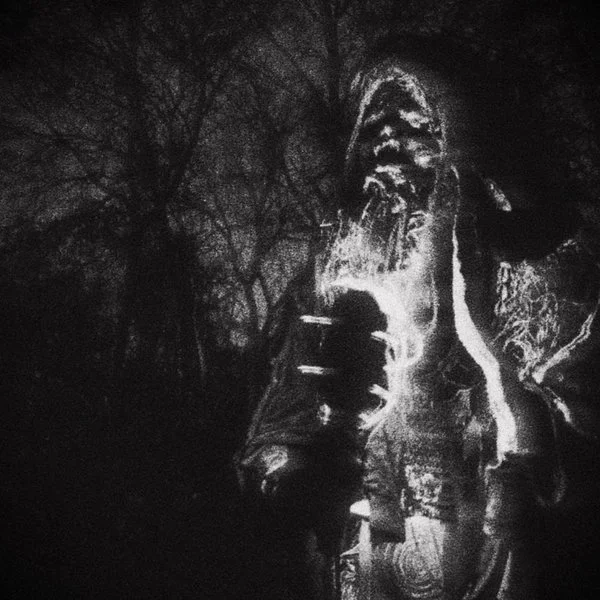
Seldom heard cassette EPs and VHS releases, Akuphone compiles this archival release illuminating Ak'Chamel's early development from 2008-2017 as enigmatic practitioners of post-apocalyptic folk and ritual psychedelia.
These recordings capture the group's signature sound in its most primal form: thoroughly f*cked lo-fi production, warped tape hiss, detuned instruments, and melancholic hysteria captured on cassette.
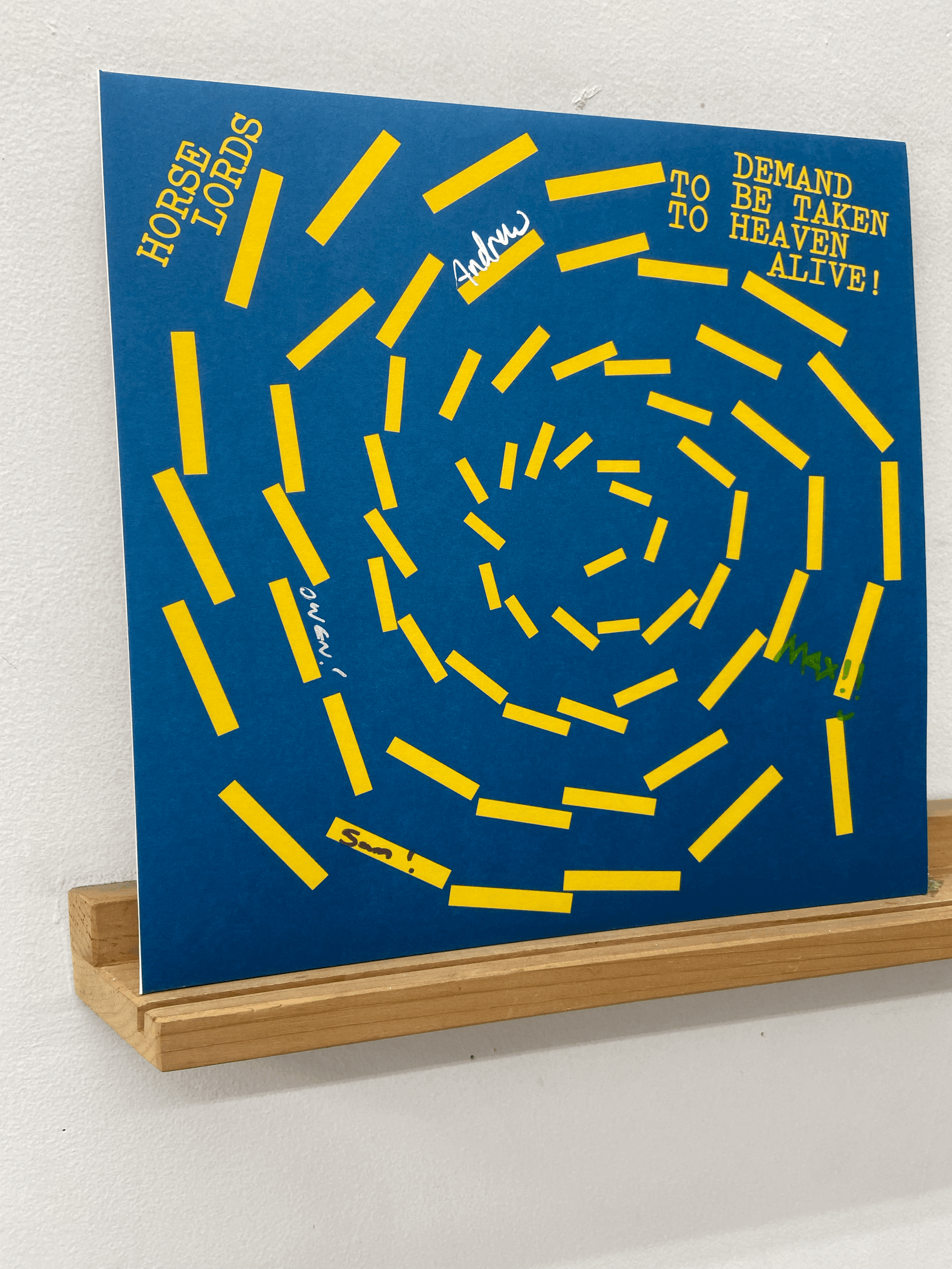
During their scorching set at Pioneer Works on October 8, 2026, Horse Lords were kind enough to sign our restocks of Demand To Be Taken To Heaven Alive!
This album double steps for longstanding fans like us. On the one hand, the new LP marks important innovations for this EU-by-way of Baltimore ensemble, while retaining the polyrthymic sensibility that everyone already appreciates. It’s also a vocal record that suggests commentary on vox more generally, total meta moves.
From the RVNG one-sheet: “The album’s twelve pieces are layered and interwoven, tonally and rhythmically complex––moiré-like patterns of interaction and tessellation that play out for both mind and body, full of sonic warrens with an inescapable groove. An electrifying leap forward for the band’s shared language, Demand to Be Taken to Heaven Alive! aims to liberate the listener into a spiritual, ecstatic, and utopic dimension of sound.”
An incredible addition to an already rock solid discography. This band remains one of our favorites working in the rock vernacular. Yeah, they borrow rhythms and tunings from elsewhere, but like Church of Anthrax, this record mostly rocks.
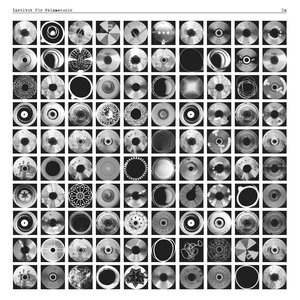
Öd, the long awaited return of Institut für Feinmotorik—the 30+ year Black Forest collective known for using eight prepared turntables to playfully investigate acoustic phenomena and experimental handmade techno through everyday objects.
Sprichst du deutsch? Nein, so deferring to the Germans:
“The only thing öd about Öd (meaning ‘barren’ or ‘boring’ in German) may well be its title: layers of improvised play and randomized loops convolve around porous, dubby groove locks, tugging at each other in a call-and-response with howling static that cuts through bulbous ambient techno into a scrap-metal Dixieland phantasm.
Stratified yet spacious, these sonic double exposures always hover on the verge of collapsing. What you think you hear might not be what you actually hear. The album’s track titles resemble Conceptual Poetry, extending this psycho-phenomenological gesture into the realm of spoken language. Conceived by renowned poet Dagmara Kraus, they become word molecules — ‘stern,’ ‘dies,’ ‘lose’—tilting delicately between German and English, constantly changing depending on the ear’s perspective and pointing back to the deeply unstable fabric connecting meaning and sound.
Which also makes Öd an unusual cross-disciplinary collaboration—at least in the field of electronic music.”
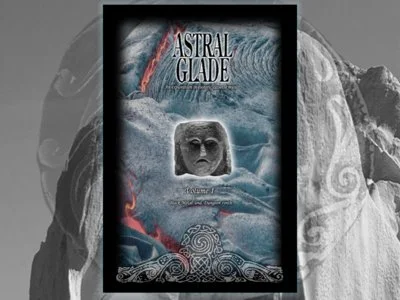
Really interesting (narrow & ) deep dive addition to #blackmetal and #darkambient subcultures in this curiously designed new volume, printed in an edition of 100.
Astral Glade: An Exploration in Esoteric Cassette Music, Vol. 1
Collaborative project from @astral_glade and @snail.farm, Volume 1 pairs an overview and feature-length survey of the enigmatic German label, Voldsom Musik, with tape reviews covering select releases from the last fifteen years. Identifying the themes, threads and connecting tissue is half the fun.
Perfect bound with heavy paper stock and an aesthetic/design pointing to Bergman and assorted esoterica.
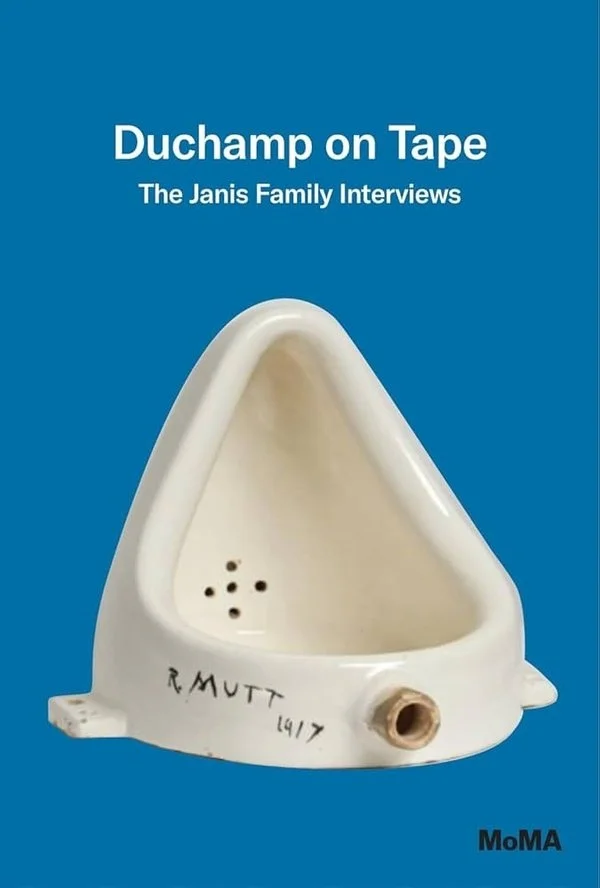
So excited for this book and the show up at Moma here in 2026. The one-sheet reads:
“Over six sessions between September 1951 and November 1952, Marcel Duchamp sat down with collectors and gallerists Harriet and Sidney Janis for a wide-ranging conversation about his inspirations and working processes, and his many opinions on the workings of the modern art world and its histories.
The Janises, owners of the influential Sidney Janis Gallery, were ardent supporters of modern art and close friends with Duchamp. Harriet, an accomplished author, led the interviews with an eye toward writing a monograph on Duchamp, though this was never realized. Now, this previously unknown chronicle is available for the first time through the efforts of Carroll Janis, Sidney and Harriet's son.
Under Harriet's expert guidance, Duchamp holds forth on his artistic philosophies, his career, his friends, his rivals and his lifelong obsession with chess. He provides an inside look at some of his most famous works, from his controversial 'Readymades' to 'The Large Glass.' Contextualized with illustrations, annotations and an introduction by Carroll Janis, this publication is a rich treasure trove of information on one of the 20th century's most controversial, groundbreaking and larger-than-life artists.”
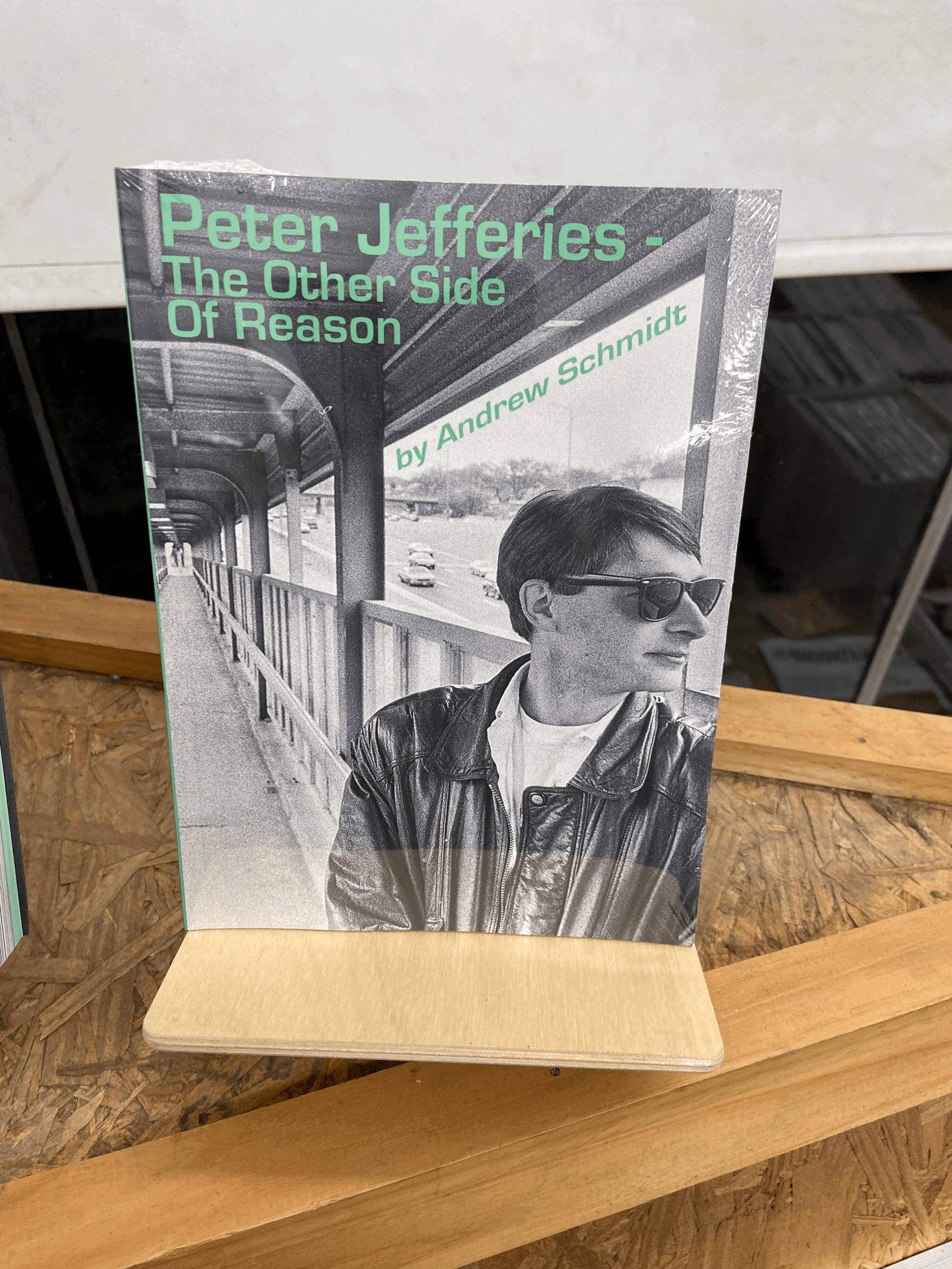
From the one-sheet and props to Hozac on this publication. We’ve been waiting decades for this:
“Hozac Books is proud to present another foundational brick in the pantheon of New Zealand underground music with Peter Jefferies – The Other Side of Reason, a career-spanning biography by music historian Andrew Schmidt of Audioculture.nz.
Covering Jefferies’ earliest musical projects during the first wave punk heyday such as Dull Emma, and Pink Noise on into Nocturnal Projections, This Kind of Punishment, Plagal Grind, Cyclops, and much more in striking detail, the author leaves no stone unturned and weaves Jefferies life story into a gripping saga of innovation, isolation, and redemption.
Alongside is the story of the evolving Flying Nun imprint as well as the creation of Xpressway which served to fill a sorely needed gap in handling & distributing more of the marginal New Zealand lo-fi recordings to the masses.
The Other Side of Reason truly shows the endless power of creative perseverance and the intensities that come therein when dealing with that immovable thrust in the core of your being and how to channel that into something that lasts for the ages.
For ten long years between 2002 and 2012, Peter Jefferies, the New Zealand indie composer and musician didn’t answer the phone or his email, when old and new fans and friends called. He didn’t want to know about the brilliant run of solo albums and live shows that sparked a major cult following in the United States. Then step by step, note by note, year by year, Jefferies emerged from his Taranaki abode on the edge of home city, New Plymouth, to see nearly every major work he’d meticulously assembled in the post-punk and alternative rock era between 1980 and 2002 in New Zealand and the US reissued and universally praised. The cultural footprint from his busy and fiercely creative years with Nocturnal Projections, This Kind of Punishment, Xpressway Records, Plagal Grind, Cyclops, Two Foot Flame and solo was that deep.
Returning sporadically to the live stage in New Zealand, new music soon flowed, adding to one of the small South Pacific nation’s most potent collections of words and sound.
Written with Peter’s cooperation, Peter Jefferies / The Other Side of Reason, reveals the stark beauty, brutal honesty and endearing humanity of his best work, as music historian, Andrew Schmidt, traces the Stratford-born musician’s life through New Zealand’s punk and post-punk hot spots in Auckland, New Plymouth, and Dunedin in the 1980s and early 1990s, and then, when the world came calling, Chicago, Vancouver, and Austin, Texas, with tours through Europe and Australia from the mid to late 1990s into the new millennium.”

We believe this was an edition of just 35 copies, possibly only available in an 8 tape box collection?
O’Gallagher (October 2, 1917 – December 4, 2007) was an avant-garde sound artist, painter and teacher whose San Francisco studio became an early gathering place for Beat writers and poets in the 1950s.
He was integral to the creation of foundations and centers for human growth, including Feathered Pipe Ranch, The Ojai Foundation and the Beatrice Wood Center for the Arts.
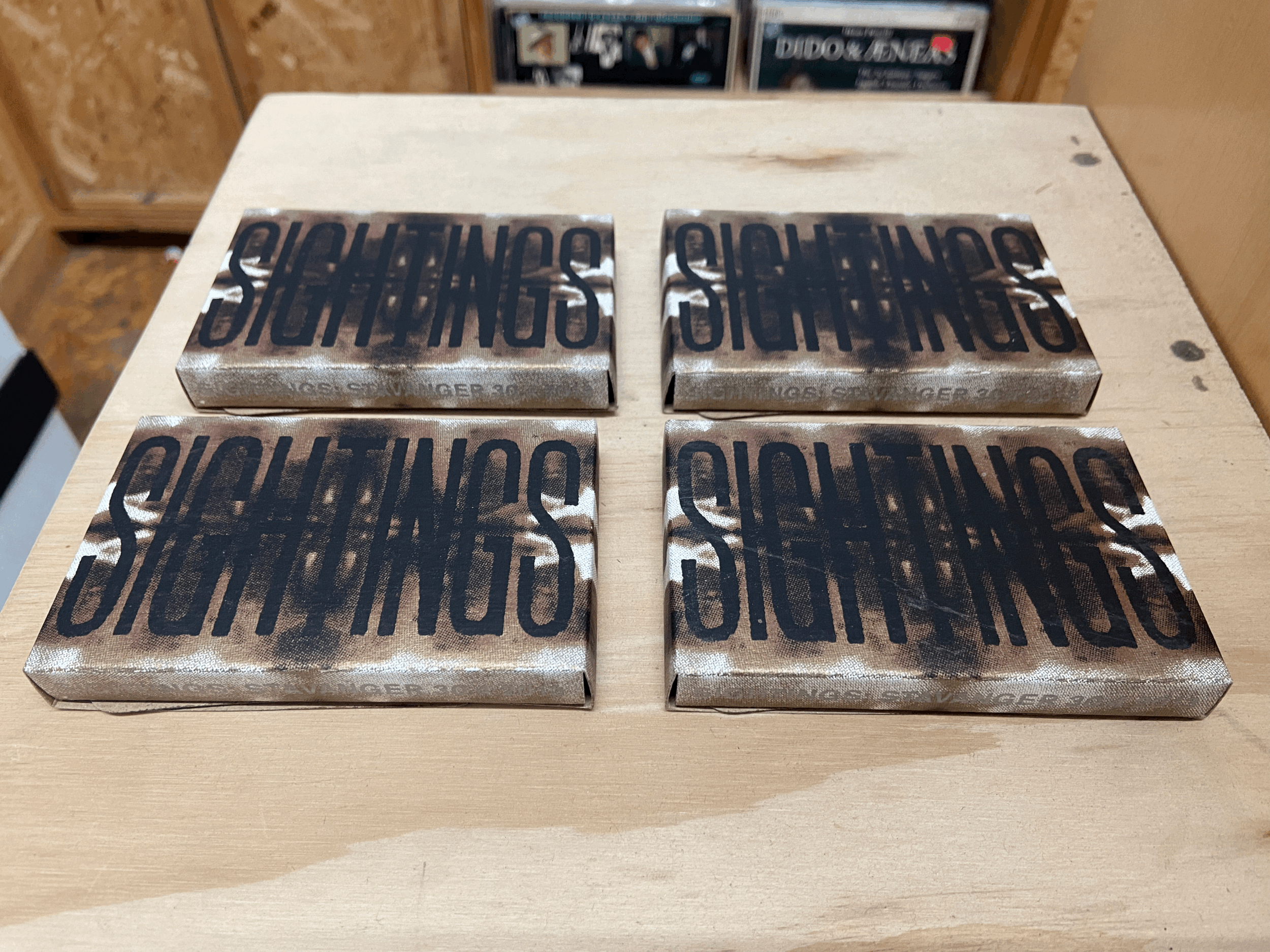
So pleased to stock the last Sightings show ever, Stavanger 30.4.2013, issued on tape by the Norwegian Drid Machine imprint back in 2015!
We’ve said it before, Sightings remain the greatest band of the era that brought about the Brooklyn brand, though Msgrs Hoffman, Lockie and Morgan had no part in the beards, the button-downs or Vice magazine. That said, they did circle with Andrew W.K.
Here is the setlist, total heat, drawing heavily from Terribly Well (Dais, 2013) and Amusers and Puzzlers (Dais, 2015):
CC
Take It In Trade
Mute's Retreat
Rivers Of Blood
13
Bucket Brigades
Bundled
The Loafer
Highest recommendation (and we don’t even like the tape format that much)!!
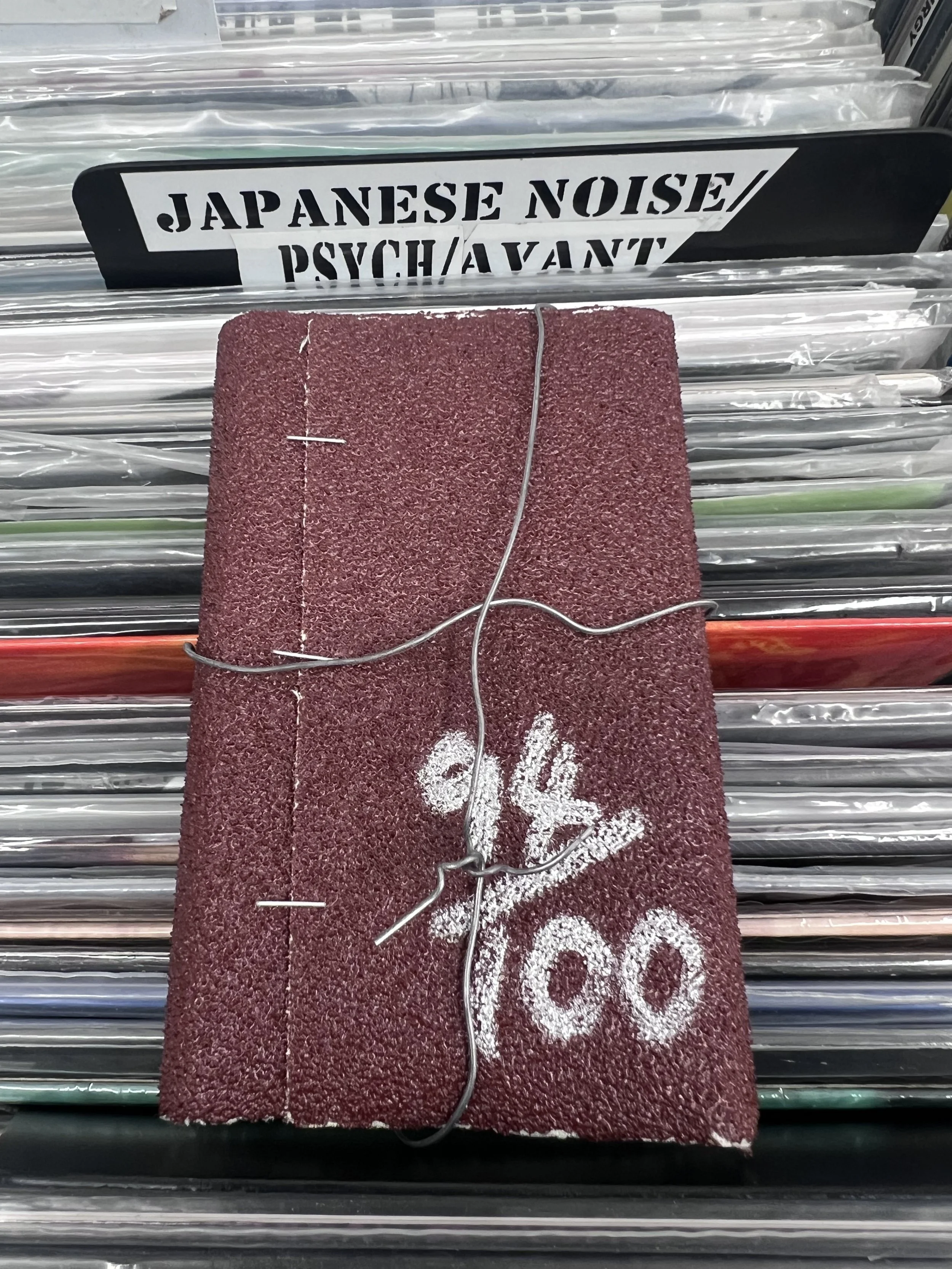
Delight your friends and neighbors by playing this 2021 reissue of the 1995 cassette originally issued by Perverse Series. This edition was issued in a whopping 100 copy run this time which is already OOP (compared to 60 copies originally).
From the Adavita Records repress one-sheet: “Using only a 1VCO as material, AUBE's meticulous mixing and effects have created a noise sound of the highest caliber that will make listeners discover new sensations even after 26 years have passed since its release.
Digitized from the master tape and every one of the tapes was dubbed by legendary Nakamichi cassette deck with the recording head azimuth adjustment.
Based on the original artwork and photos, the double-layered jacket (color photo and transparent sheet) has been reproduced and is housed in sandpaper and wire. “

November 17, 2023: After more than a decade, our Dystopian t-shirt has been put to rest. The cheeky irony sits less well when living through our own spotty patch of history. Yesterday we spotted two burned out cars on the street in just one commute home. The spirit of Rollerball lives on even if the t-shirt design is no more.
To right/re-write the tone of our last t-shirt a bit, we borrow from an iconic avant-garde luminary who is experiencing a renaissance of sorts. Everyone is crazy for Robert Ashley these days, so many voices doing the voices.
We’ve decided to appropriate what’s appropriate too, so here’s our Automatic Ashley design!
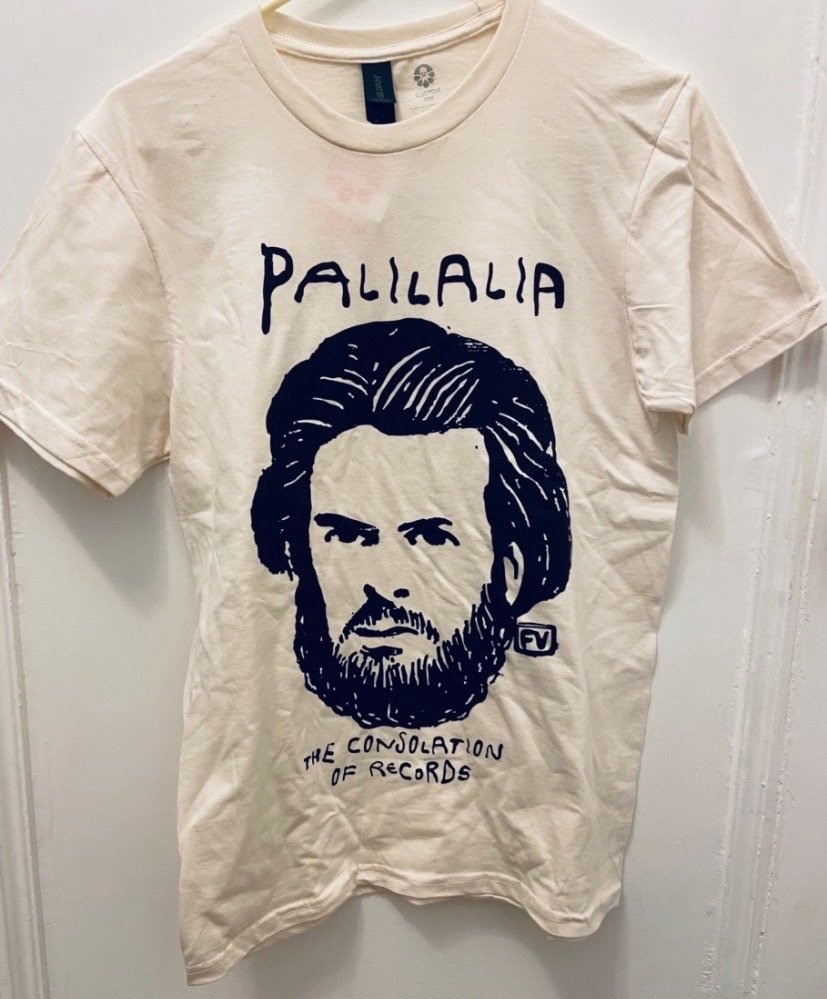
Acquired these direct from Bill Orcutt during his March 20, 21 and 22nd residency at Roulette. The Four Louies night on 3.21.26 was extraordinary, especially the performance of that Fake Estates Lp. And the other nights featured an amazing cast of fellow artists, some on PALILALIA, and among others:
Wendy Eisenberg
Chris Corsano
Shane Parish
Cyrus Pireh
Ava Mendoza
Kris Gruda
…. and even an appearance from shop favorite William Winant!
We only have a few of each size, so please act fast.
Selling it a smidge cheaper than the Orcutt’s merch table, as not appear like we are in on the grift.
Grateful to have these in the shop.


Nashville's Terry Reed-he being neither Jerry Reed nor Terry Reed-self released his 'On Way To Alpha' mini album into this universe sometime in 1975 as a 7". While novel in formant, Reed's fantastical, solitudinarian take on inchoate, Psychedelic expression is uncannily impressive. Gentle psych, loner psych, however you choose to approach it, this aural nug is a giver of tremendous reward. Little seems to be known about Reed, or this release, via the interwebs & original copies rarely turn up. So I will roll the spiffiest of spliffs in homage to the keen, curatorial scholarship of Johann Klepp & Zaius Tapes. He says this is the second volume in an American Loner series (the 1st being the Hams 12") & I eagerly await volume 3.
One time edition of 200.
FFO; Bobb Trimble, Terry Brooks, Simones, S.T Mikael.
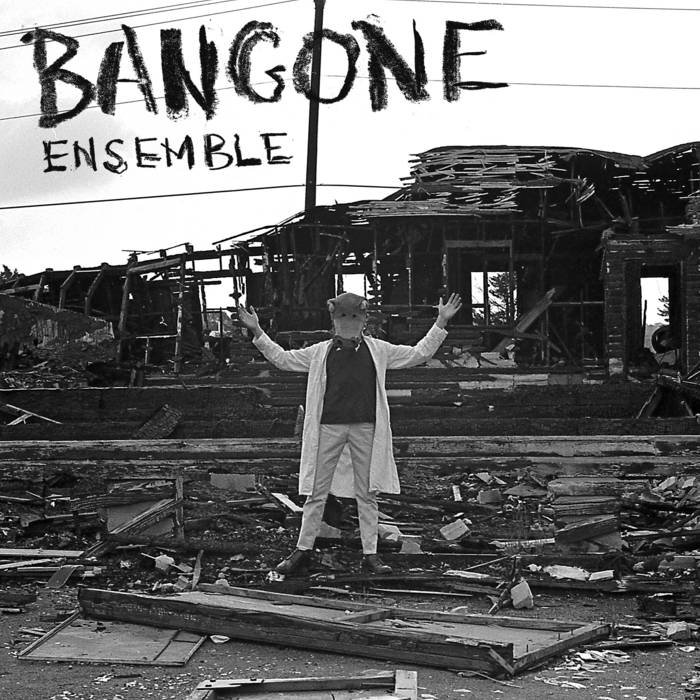
A genuine surprise from Bill Nace’s Open Mouth imprint! And easily one of our favorite archival releases of 2025!
BANGONE appears to have been serious scrappy outré art rock from, get this, Rutgers/New Brunswick, NJ circa mid-1970s …
Again, the one-sheet reads a little too ChatGPT #goodtobetrue, but ex-Hampshire College music scholar Byron Coley describes this as music “being done in the name of weirdo-rock … the truest expression of non-idiotic teen rebellion. It’s a great damn sound, mixing jazz, art-rock, ‘new music’ and primitivism in much the same way DC band the Muffins did during their earliest days. The sound is kind of like a child’s guide to the avant garde — from the Mothers to the Soft Machine to the Magic Band to the Arkestra and beyond, with a soupçon of sheer wise-assery stirred in for good measure.”
Really hoping/praying this LP isn’t some kind of prank, as it’s currently our favorite release on Open Mouth, raw, primitive and, dare we say, very real. Loving how it dips into jazz, rock, noise, and outsider music. Hate New Jersey but love these tracks.
And beyond the mystery of its lofi prog/jazz jamming, one lingering question remains:
How to pronounce the name of the band?
BANG ON?
BANG ONE?
Highly Recommended!!
From our own Rich Mudge:
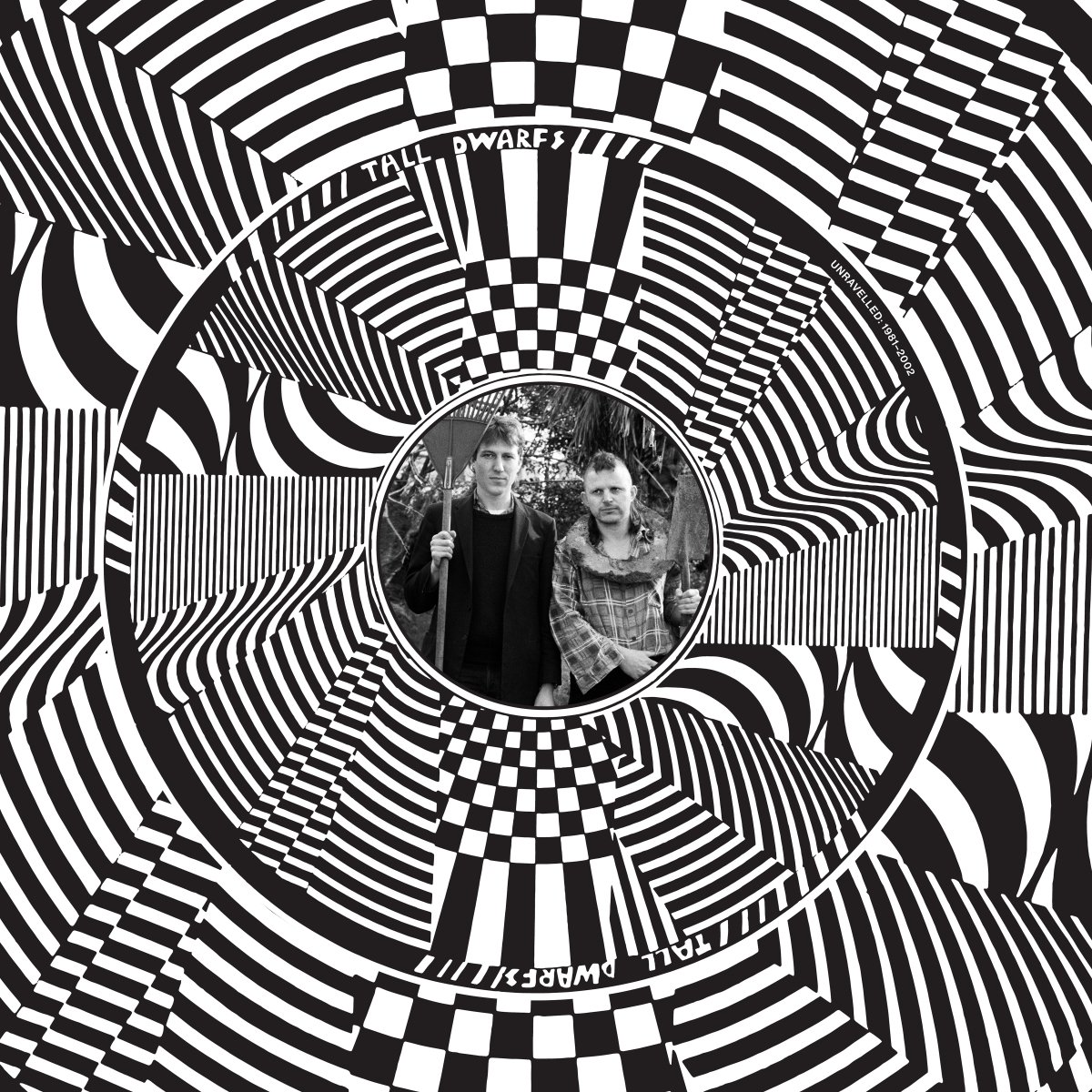
“I feel like one shouldn’t need much convincing as to why to pick up the career spanning Tall Dwarfs box set, but here it goes.
Most of these releases are out-of-print and go for serious cash when one can track them down - even I don’t own all this stuff! Merge Records has done a public service here in cahoots with Alec Bathgate to create what they call ‘an abbreviated primer,’ which feels like a modest assessment: 55 songs spanning 4 LPs and a 20 page booklet full of photos, art and lyrics cover a lot of material and hit that sweet spot that will appeal to those who want to dip into the Tall Dwarfs world of weirdness and if you are already familiar you know where you stand on this box (get it!). This kind of documentation/fanaticism is where it’s at.
Alec Bathgate and Chris Knox emerged as Tall Dwarfs following the demise of Toy Love and a burnout with the machinations of the music industry. As Tall Dwarfs they make a left turn from the comparatively straightforward pop songs of Toy Love to warped pop songs of their own invention seemingly fully formed. The box set runs chronologically by release date and starts off with the entire Three Songs EP and right away kicks off with three solid tracks and perhaps their first ‘hit.’ All this recorded to 4-track by two guys and minimal instrumentation and at times literal stuff from the kitchen sink for percussion/rhythm.
We should be so lucky that what essentially started off as a one off continued over the years delivering some of the most perversely endearing pop music from the isles of New Zealand. Take a listen to ‘Entropy’ for as fine an example as can be of familiar and perfect pop broadcast from the alien universe of Tall Dwarfs. The percussion and rhythm gallops as if to keep up with the shifting point of view in the lyrics all held together by those high harmonies in the chorus.
The box is covered in Alec’s artwork as are the gatefold LPs and the LP sized booklet is really nice treat. Lotsa pages with both Chris’ and Alec’s art, cool photos, a discography and lyrics.
Particularly delightful is Chris’ hand drawn press kit for the 3 EPs release - it’s basically a history of the Tall Dwarfs from inception to 1994 (the date of the release).“
Highly recommended!